
Nirmala Sitharaman’s Vision for AI Growth and the Bharat Vistaar AI Tool
Explore India’s AI growth strategy under Nirmala Sitharaman and how the Bharat Vistaar AI Tool is shaping inclusive, scalable, and future-ready innovation.
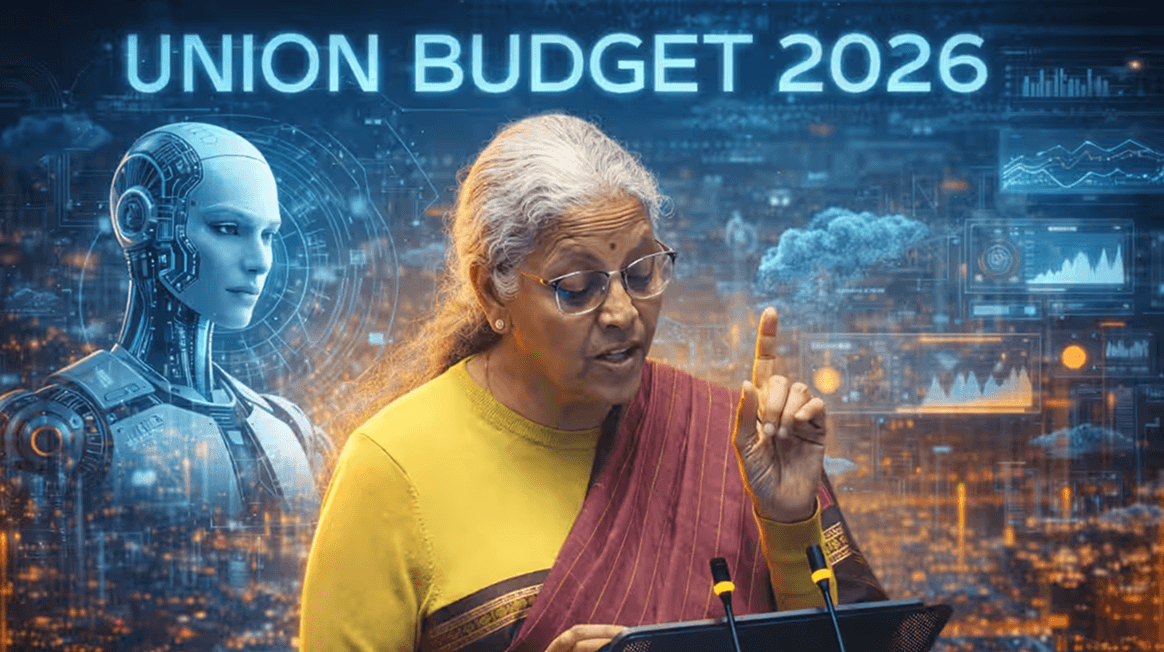
Artificial Intelligence (AI) is no longer a futuristic ideal; it is a foundational pillar of technological evolution worldwide. From healthcare diagnosis to climate modeling, from personalized education to autonomous systems, AI is reshaping every industry. Recognizing this transformative potential, India has set ambitious ambitions to not just participate in the AI revolution, but to lead it. Central to this strategy are visionary policy frameworks and tools like the Bharat Vistaar AI Tool, championed in public discourse by India’s Finance Minister, Nirmala Sitharaman.
India’s policy approach to AI reflects a blend of pragmatism and aspiration. While global leaders focus on commercialization and private innovation, India seeks to balance economic growth with inclusivity, equity, and capacity building. In her public statements, Sitharaman has consistently emphasized that AI growth in India cannot be limited to metros or elite institutions; it must reach every state, sector, and socio-economic segment. This vision aligns with India’s broader development agenda, where technology is a force multiplier for opportunity, productivity, and empowerment.
AI as a National Growth Engine
India’s demographic advantage, a young and digitally adept population, gives it a unique edge in the next decade. However, realizing the AI opportunity requires strategic investment in data infrastructure, talent development, innovation ecosystems, and governance frameworks. Sitharaman has articulated a policy mindset that treats AI not as a standalone domain, but as a cross-cutting catalyst for national priorities such as healthcare access, agricultural productivity, financial inclusion, and climate resilience.
This means that government AI policy is designed to:
- Encourage local innovation tailored to India’s socio-economic complexities.
- Support AI adoption in enterprises of all sizes, especially micro, small, and medium businesses (MSMEs).
- Strengthen skilling and reskilling to prepare India’s workforce for an AI-enhanced economy.
- Ensure ethical and responsible AI deployment with standards for fairness, transparency, and safety.
To make these goals practical, tools and platforms are essential, and this is where Bharat Vistaar comes in.
Introducing the Bharat Vistaar AI Tool
The Bharat Vistaar AI Tool is positioned as an AI platform with the purpose of catalyzing innovation across sectors and demographics. While not the only AI initiative in India, it symbolizes a shift from policy vision to operational impact. The tool offers capabilities such as language processing in Indic languages, accessible data analytics, automated decision systems, and modular AI services that can be integrated into digital products and services.
What makes Bharat Vistaar distinctive is its orientation towards:
- Inclusivity: Supporting regional languages and local contexts rather than focusing only on English or global standards.
- Scalability: Modular design allowing small organizations to adopt AI without heavy upfront investments.
- Ecosystem Support: Interfaces for developers, startups, researchers, and public institutions to collaborate and build on top of the platform.
In this sense, the platform not only operationalizes AI technology but also democratizes access. AI capabilities that were once the domain of well-funded tech firms are now becoming accessible to regional developers, local NGOs, academic researchers, and self-employed innovators.
Implications for India’s Tech Ecosystem
The implications of a government-driven AI vision coupled with enabling tools are profound:
- Entrepreneurship Boost: Startups can leverage Bharat Vistaar to build products faster, at lower cost, and for localized use cases such as regional content generation, crop yield prediction or community health monitoring.
- Job Creation & Reskilling: AI adoption doesn’t eliminate jobs, it transforms them. With integrated AI platforms, professionals can augment their expertise, leading to hybrid roles in analytics, automation, and digital management.
- Bridging Urban-Rural Gaps: Language-agnostic AI tools make technology accessible in rural areas, enabling education, financial services, and healthcare delivery through vernacular interfaces.
- Public Service Innovation: Governments at the state and local levels can build data-driven governance models, improving service delivery in sectors like sanitation, traffic management, and citizen support.
- Global Competitiveness: By prioritizing AI capacity at scale, India positions itself as a global hub for affordable and inclusive tech innovation.
Conclusion
India’s journey into the AI era is both ambitious and pragmatic. Nirmala Sitharaman’s vision highlights not only economic acceleration but also social impact, inclusive access, and strategic autonomy in emerging technologies. With tools like the Bharat Vistaar AI Tool, the nation is laying the groundwork for a future where AI is accessible, scalable, and purpose-driven. As this ecosystem evolves, insights and innovation platforms such as Frantic play a vital role in interpreting policy-driven tech growth, enabling businesses and innovators to align with India’s AI-first momentum, ultimately shaping a digital Bharat that thrives on equity, intelligence, and sustainable progress.
Latest Articles
Why Are the U.S. and Israel Attacking Iran? What We Know So Far
U.S. and Israel launch major strikes on Iran. Explore the causes, retaliation, global reactions, and what this escalation means for Middle East stability.

Iran Launches Widespread Attacks Across Middle East After US and Israel Strike Leadership and Military Sites
Iran fires missiles across Gulf states after US and Israel strike leadership sites, escalating regional conflict and raising global security fears.


.png&w=3840&q=75)
